
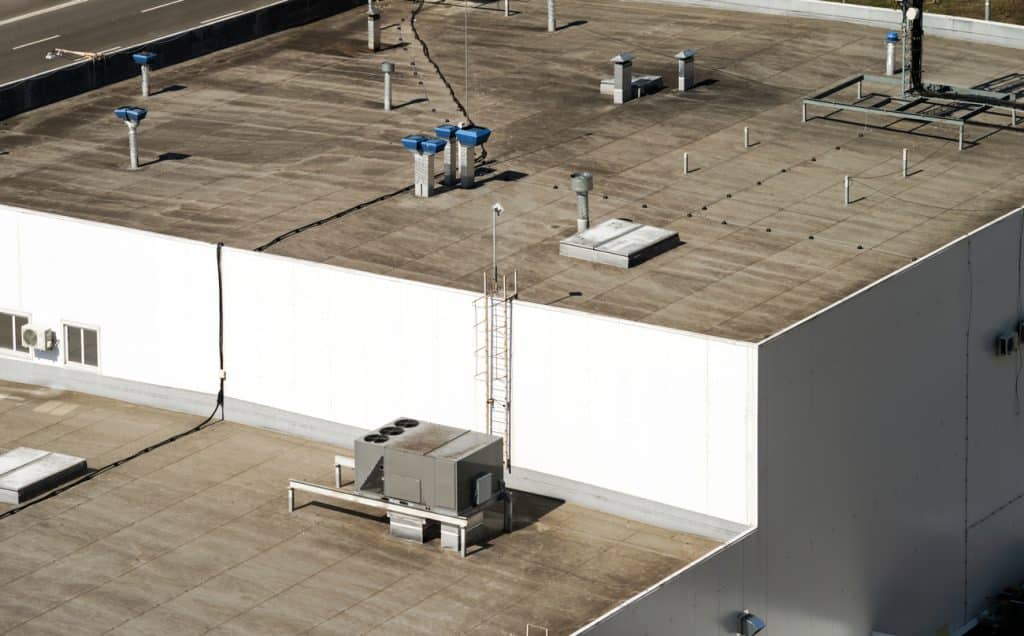
Commercial roofs look simple from the ground, but the systems above many buildings are more intricate than they seem. They are often built on low-slope or flat surfaces. They also use materials and details that differ from many residential roofs. Because of that, commercial roofing has its own design choices, maintenance needs, and performance features. A closer look at these systems reveals useful insights into how they handle water, heat, and weather.
Many Commercial Roofs Are Low-Slope, Not Truly Flat
Commercial roofs are often called flat roofs, but many are constructed with a slight slope. That slope helps move water toward drains, scuppers, or gutters. Without drainage, standing water can stress the roof system and shorten its service life. The slope may be hard to notice from the ground. Even so, drainage is one of the most important parts of a commercial roof design. It is one of those details that does not look like much, but it matters a lot.
Green Roofs Add More Than Plants
Some commercial buildings use green roofs with vegetation planted above a waterproofing system. These roofs can help reduce and slow stormwater runoff. They can also help moderate roof temperatures. A green roof is not just soil on top of a building. It usually includes drainage layers, filter fabrics, growing media, and plant selection suited to the site. There is usually more going on up there than people expect.
Cool Roofs Can Stay Much Cooler
Cool roofs are designed to reflect more sunlight and absorb less heat than darker roofs. According to the U.S. Department of Energy, a reflective roof can stay more than 50°F cooler under sunny conditions. That can reduce heat transfer into the building below. Results vary by climate, insulation, and building design. Even so, roof color and surface properties can affect heat gain in a meaningful way.
Commercial Roofs Use Several Attachment Methods
Commercial roofing membranes are not all installed the same way. Some systems are mechanically attached with fasteners and plates. Others are fully adhered with approved adhesives. Some assemblies also use heat-welded seams. The method depends on the roof type, deck, wind requirements, and system design. That is one reason commercial roofing specifications can differ from one building to another.
Flashing and Seams Matter as Much as Surface Material
The field of the roof covers most of the area, but edges and transitions often need the most attention. Flashings, seams, penetrations, and drains are common leak points. These details help the roof handle movement and direct water away from openings.
A roof system is only as dependable as its weakest detail. That is why inspections often focus on these smaller areas. They may look minor, but they are usually not minor when water gets in. When you need commercial roofing services in Wilmington, NC, contact RoofVantage.